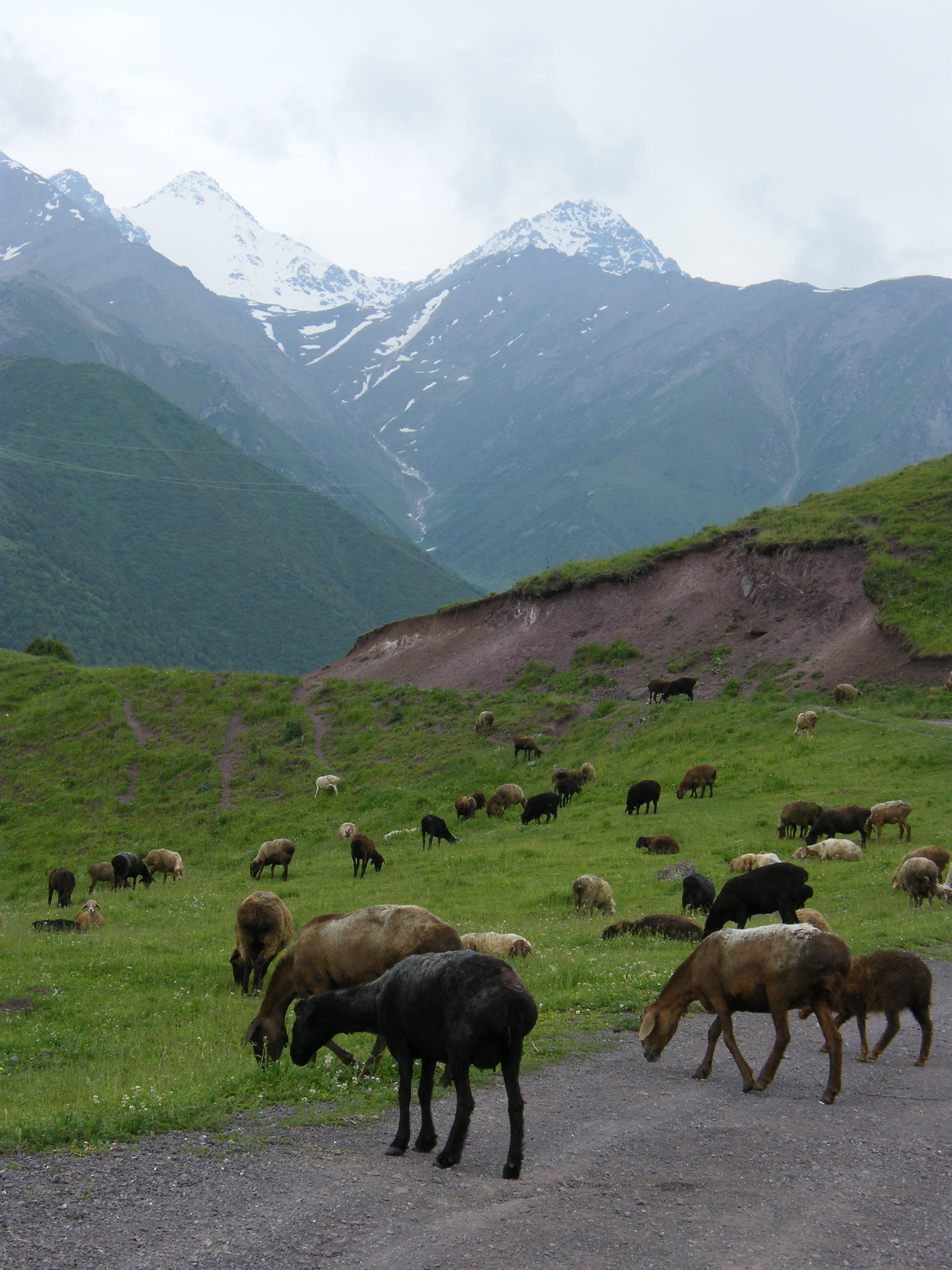


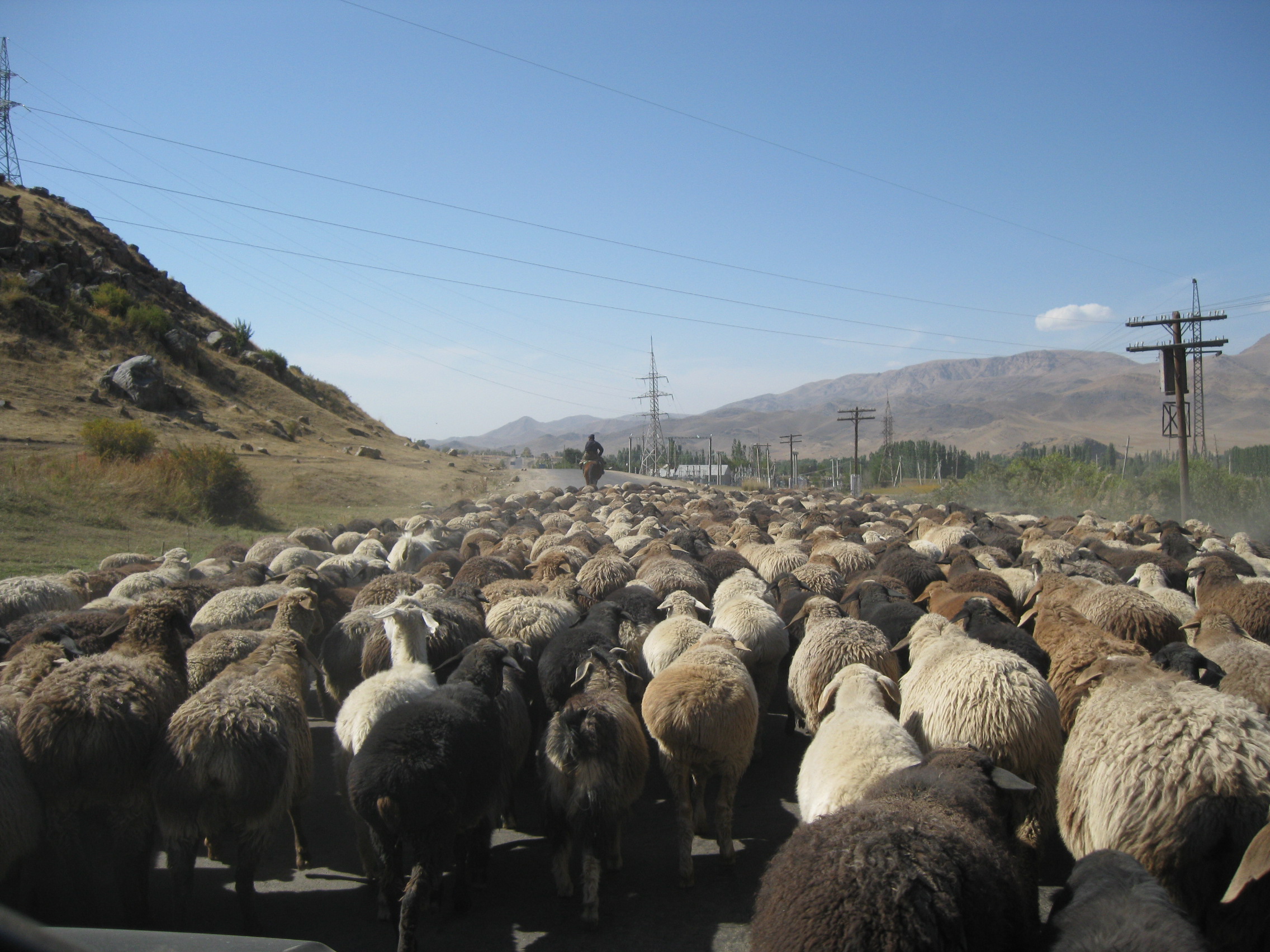
In our time overseas, we lived among a people with a rich history as nomadic shepherds. Still today, they tend sheep in the rural areas of the country and take them to pasture in the mountain grasslands during the summer months. The Bible soars to life in this context of shepherding and sheep.
I will never forget the first time I watched men come together to slaughter a sheep in order to honor a guest with a special meal. It’s like watching the gospel on full display, as the sheep so willingly walks right to its death.
No fight. No struggle.
The words of John kept echoing through my mind:
“Behold, the Lamb of God, who takes away the sin of the world!” (1:29)
“The good shepherd lays down his life for the sheep.” (10:11)
Our pastor recently walked us through a passage in Hosea, a beautiful portrayal of God’s love for His people, despite their wonderings and prostitution and unworthiness. Hosea takes for himself a wife, who is a known prostitute, even has children in her infidelity. She turns her back on Hosea and turns, once again, to countless other lovers, walking in such open disregard for him that she is deserving of punishment . . . even death.
Hosea should have rejected her and run the other way . . . as fast and far as he could. Instead, chapter 2, verses 14-15 declare:
“Therefore, behold, I will allure her,
and bring her into the wilderness,
and speak tenderly to her.
And there I will giver her her vineyards
and make the Valley of Achor a door of hope.”
Rather than judgment and condemnation and punishment and death, Hosea woos her, allures her, speaks tenderly to her, buys her back, restores her to a place of honor as his wife. He redeems her. A valley known for judgment and punishment becomes a valley known as a door of hope.
Sound familiar?
As the words of Hosea washed over me that day, and as I literally wept that God would choose to give us hope through His Son rather than judgment and condemnation and punishment and death, I found myself remembering this beautiful culture of nomadic shepherds, tenderly caring for their sheep.
Though there is a practical and economical reason for shepherding their sheep, they pride themselves on their ability to tend the sheep. To care for them. The sheep are more than meat for food, wool for clothes and blankets, or money for their families, they are theirs for keeping, tending. Identity. The children are taught how to care for the sheep from a very early age.
My husband is a master at taking a biblical story or concept and bridging it to a practical aspect of the culture. He makes it come alive.
Imagine sitting in a room full of eager and proud and talkative teenagers. The conversation moves to shepherds. As they describe a shepherd, they get even more animated. This is a conversation they dominate.
“Shepherds must guide the sheep. They must care for them.
“Must tend their wool.”
“Must protect them from disease.”
Popcorn conversation about something with which they are very familiar.
“They must lead the sheep to pasture. Must be on the lookout for danger.”
“Must make sure all are accounted for.”
Interjection . . .
“Ah, interesting. I read a story about a shepherd who was tending a hundred sheep. He actually left the ninety-nine and went to search for the one who had gone astray.” (Straight out of Matthew 18!)
The dynamic suddenly ramps up. More animation.
“No way! What kind of shepherd leaves his whole flock to go find one little sheep?”
“It puts the entire flock in jeopardy!”
“That’s not smart shepherding at all. It’s his job to care for the whole.”
“Really, it’s the sheep’s fault for wandering off.”
“The shepherd still has ninety-nine healthy sheep. The one does not matter.”
Time for a pivot.
“Oh, I see. We’ve been looking at this whole thing from the perspective of the shepherd. Now, what if you were that one sheep?”
Stunned silence.
“Well, I guess that would be the most caring shepherd of all. That he would risk so much to go in search of one lost sheep.”
And there it is.
We have a God who leaves the ninety-nine to go find the one. He is the most caring Shepherd of them all. Just like Hosea and the shepherd sitting in the pasture tending his sheep, our God should leave us to die because of our wanderings. When we run after other lovers and not Him. Our sin.
Instead, He steps in. Finds us. Redeems us.
This is why my heart sings with unexplainable joy . . . on the good days, on the bad days.
He alone made a way to buy us back, to free us, to restore us.
“For thus says the Lord God: Behold, I, I myself will search for my sheep and will seek them out.” (Ezekiel 34:12 ESV)
The words of a modern worship song come to mind . . . chases us down, fights till we are found, an overwhelming and reckless love. Yes, from a human perspective, this kind of love seems reckless. Who actually leaves the ninety-nine? Oh, but not for the Good Shepherd. There’s nothing reckless about it. He brilliantly planned this great rescue before time ever began.
If you are that one sheep, this is reason for rejoicing.
For all your days.
It’s so hard for me convey all the emotion of this truth in mere black and white words.
The God of the universe, Creator of all things, Sovereign Ruler of all, made a way for me. He made a way for you, too. This is the gospel message we should preach to ourselves daily. How much easier to bear up under the cross daily when your heart soars with awe and wonder at Who He is and what He has done!
No matter what circumstance you are facing today, may you be as overwhelmed by this truth as that group of national teenagers sitting in that classroom on that day.
We have a great Shepherd who knows us. He cares for us. He finds us. He allures us. He speaks tenderly to us.
But be careful. Don’t make it about you. Marvel at who He is.
Look to Him always and follow Him.
 A Thousand Little Deaths
Love!
LikeLike